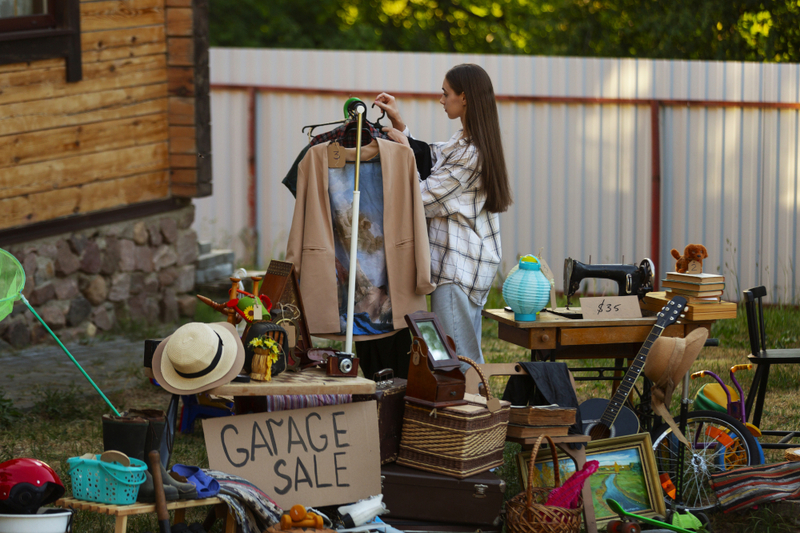
We tend to think of excess belongings as an aesthetic issue - messy perhaps, but ultimately harmless. Yet, clutter is not just a visual problem. Research suggests that the amount of stuff in a home is directly linked to elevated cortisol levels in its inhabitants. In other words, clutter has a biological effect on us.
Our brains are wired to process our environment constantly, scanning for things that need attention. Every object we own but don't use is a tiny, unresolved task; a to-do item with no deadline. Like the guitar we meant to learn how to play, the bread maker still in the box and the container of craft supplies we'll get to someday. Individually, they're pretty insignificant. However collectively, they hum at a persistent frequency just below consciousness.
Many of our unused items have one thing in common: they were purchased on behalf of a future self that never quite arrived. The running shoes were for the version of us who wakes up at 6am. The language learning software was for the version of us with a planned trip to Portugal. The meditation cushion was for the version of us who has found peace.
There's certainly nothing wrong with such aspirations. But when the aspiration collects dust, it becomes something else - a small, daily reminder of the gap between who we are and who we planned to be. Multiply that by fifty objects, and we're not just living with clutter, we're living in a museum of abandoned intentions.
When we buy something, we think of it as a transaction with one price. But ownership is ongoing. Things need to be stored, organized, cleaned, maintained, insured, moved and eventually disposed of. A boat is often described as 'a hole in the water we throw money into', but the principle applies to smaller, mundane objects as well.
Beyond money, there's the cost of attention. Every object in our space competes for cognitive real estate. Researchers call this 'decision fatigue' in other contexts, but the same mechanism applies to our environment. A cluttered space forces our brain to work harder just to navigate daily life. We make more micro-decisions. We spend more time looking for things. We carry a faint, persistent awareness that something needs to be dealt with. Yeah, the stuff we don't use isn't neutral. It's a slow drain.
If our unused belongings cause so much friction, why do we keep them? Loss aversion is part of it. This is where the ache of losing something is felt more intensely than the pleasure of gaining it. Sunk cost thinking is another trap. We paid for it, so throwing it out feels like admitting we wasted money. But the money is already gone. Keeping the object doesn't recover it. It just adds ongoing cost to a past purchase. Then there's identity. We keep things because they represent who we were, who we want to be or who we're told we should be. The inherited china we feel guilty not displaying. The trophy from a decade ago. The clothes that fit a body or a life, we no longer have.
What Happens When We Let Go
People who have cleared out significant amounts of possessions often describe the same thing: a feeling of lightness that surprises them. Not just physically, but mentally. Like an underlying frequency they didn't know was on, has finally been switched off.
Have a garge sale or donate to a local thrift store. Less to manage means more mental bandwidth for what actually matters. Fewer reminders of broken promises we've made to ourselves, sitting on shelves and stuffed in closets, means a richer, more peaceful inner world.
This isn't about deprivation or becoming a minimalist that owns only 20 pieces of clothing and sleeps on a tatami mat. It's about keeping only what we use, need and genuinely love and releasing everything that is just taking up space. The things we own should serve us in some way. When they stop doing that and sit unused gathering dust and guilt, without realizing it, we end up serving them!